Vietnam pangasius fillet supplier — sourcing playbook 2026
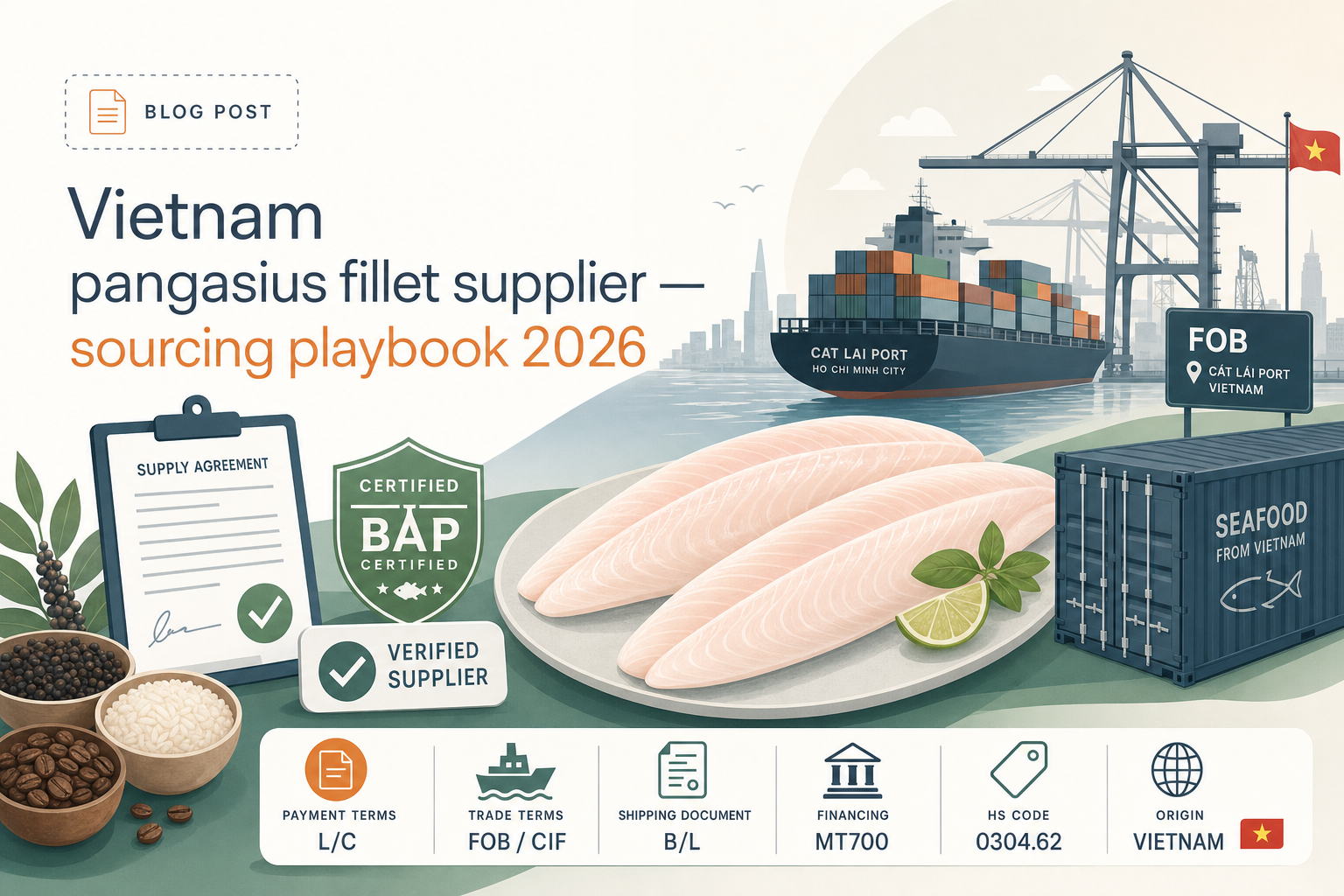
Vietnam pangasius fillet supplier — sourcing playbook: Vietnam remains a major pangasius origin, with export value above USD 2 billion in VASEP pangasius export updates and demand concentrated in China, the US, and EU per FAO GLOBEFISH pangasius market notes. This playbook shows how to shortlist factories, verify documents, and run a clean RFQ.
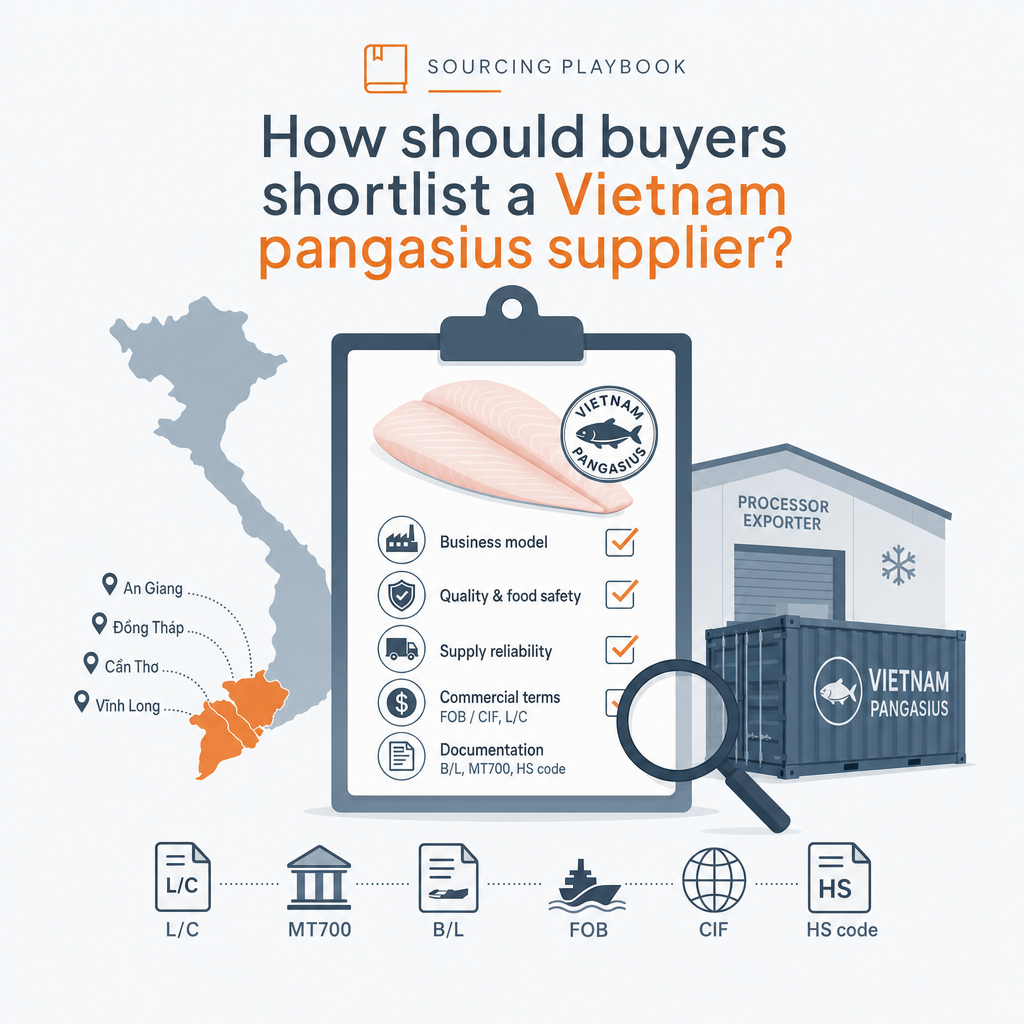
How should buyers shortlist a Vietnam pangasius supplier?
Start with the business model. A Vietnam pangasius supplier may be a processor-exporter, a trading house, or a processor with contracted farms in An Giang, Đồng Tháp, Cần Thơ, or Vĩnh Long. For frozen fillets, the processor-exporter is usually easier to audit because one company controls cutting, trimming, freezing, packing, and export documents.
Ask each supplier for a capability profile before you request price. The profile should include plant address, export markets, annual product focus, species name, trim options, freezing method, glazing range, packing format, and cold-store access. Cross-check the company name against public trade references such as Vietnam Customs trade information and seafood association listings when available.
A practical shortlist has three layers: - Must-have: export license, food safety certification, recent audit report, EU or US market experience if relevant. - Product fit: white meat, light pink meat, semi-trimmed, well-trimmed, portion cuts, skinless fillets, or value-added items. - Commercial fit: FOB Ho Chi Minh City, CIF destination, L/C acceptance, sample speed, and English document quality.
If you are new to Vietnam seafood, read the Vietnam seafood export guide before supplier calls. It helps you understand why pangasius, shrimp, tuna, and squid suppliers follow different document routines.
ViRFQ recommends asking suppliers to quote against one shared specification sheet. It reduces vague offers and makes the final comparison fair.
Frozen basa fillet import specs that affect price and claims
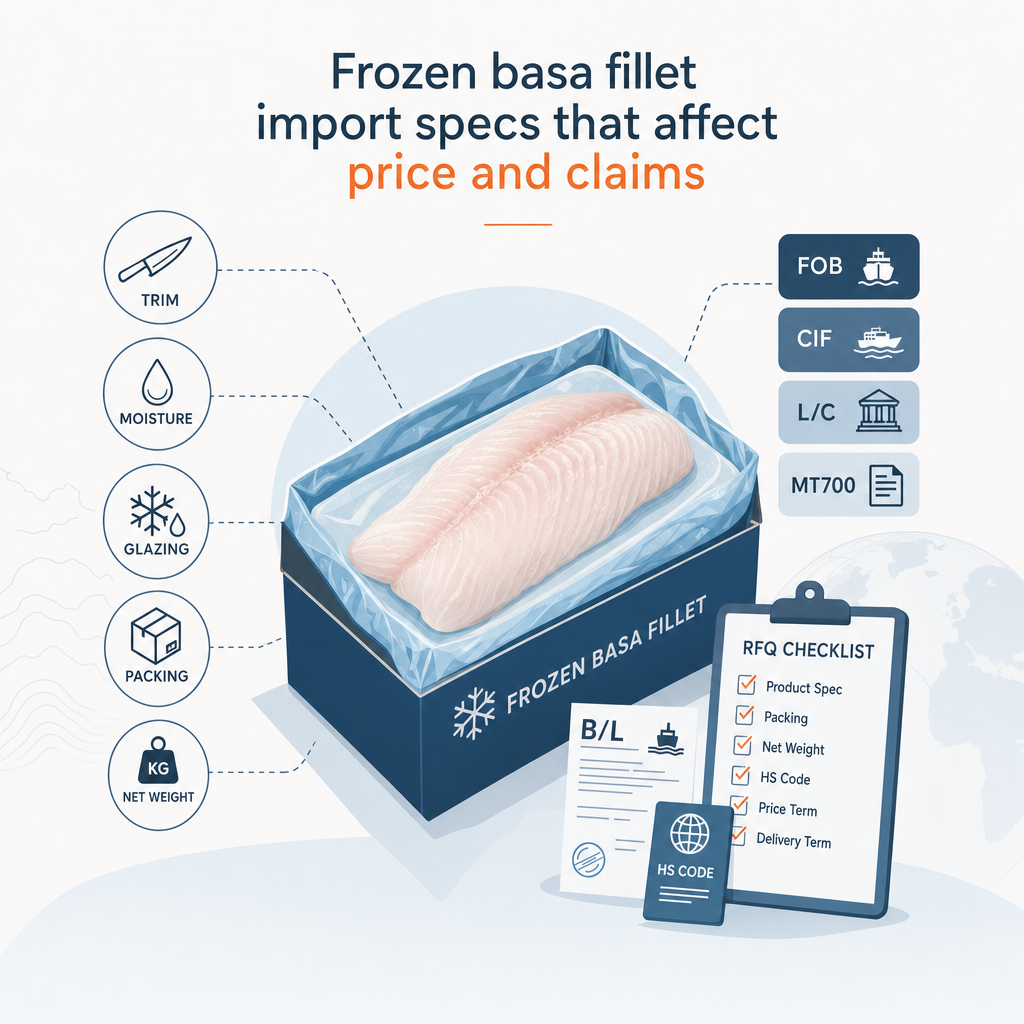
Frozen basa fillet import pricing changes quickly when the spec changes. Do not ask only for “pangasius fillet.” That phrase can hide big differences in trim, moisture, glazing, packing, and net weight. A clean RFQ should define the product before the supplier gives a number.
Use this simple format:
| Spec item | What to request | |---|---| | Species | Pangasius hypophthalmus, also sold as basa or swai in some markets | | Form | Skinless, boneless frozen fillet | | Color | White, light pink, or pink | | Trim | Regular trim, well-trimmed, or buyer-defined trim | | Freezing | IQF or block frozen | | Glazing | Declared percentage and net weight basis | | Packing | Retail bag, master carton, or food-service carton | | Documents | Commercial invoice, packing list, health certificate, bill of lading |
Glazing is a common dispute point. A lower invoice price can become expensive if the received net fish weight is lower than expected. Your RFQ should say whether price is based on gross weight or net weight after glazing.
For EU buyers, official controls and residue monitoring sit under EU Regulation 2017/625, so supplier documentation must match the consignee, establishment, and shipment details. For US buyers, review the FDA import alerts database before confirming a new shipper.
You can also share the health certificate checklist and packing list template with your supplier early. This helps prevent small document errors that delay cold-chain cargo.
What drives pangasius fillet price per kg?
Pangasius fillet price per kg is shaped by raw fish cost, yield, trim level, color, freezing method, glazing, carton type, payment term, and freight market. The same factory can quote different prices for two buyers because the specs are not identical.
Main price drivers include: - Color grade: white meat often costs more than darker lots because it suits retail and food-service buyers. - Trim level: deeper trimming improves appearance but lowers yield. - Glazing and net weight: higher glazing can make the headline price look attractive, but landed usable weight may disappoint. - Incoterm: FOB gives you freight control; CIF bundles sea freight and insurance into the supplier offer. - Payment term: L/C, deposit plus balance, and open account all change supplier risk.
For trade terms, use the FOB vs CIF checklist before comparing offers. If you use letters of credit, align the document set with ICC UCP 600 rules and avoid wording that the factory cannot satisfy. For delivery terms, reference ICC Incoterms 2020 rules in the sales contract.
A good RFQ asks for price validity, loading port, carton dimensions, lead time, minimum order quantity, and sample cost in one message. It should also request photos of actual production or retained samples, not only catalogue images.
Vietnam seafood exporter verification before sampling
Vietnam seafood exporter verification should happen before you pay for samples. Sampling is useful, but it does not replace company checks. A well-packed sample can come from a different line than your shipment, so you need both product review and exporter review.
Ask for these documents first: - Business registration matching the bank beneficiary. - Export license or seafood establishment approval where applicable. - Food safety certification with a recent audit date. - Product specification sheet signed or stamped by the exporter. - Recent shipment references, with buyer names redacted if needed. - Draft commercial invoice and packing list using your buyer details.
Then run a video call. Ask the supplier to show the plant exterior sign, cold store, packing room entrance, master carton labels, and quality-control area where allowed. If the exporter refuses every live check, slow down.
Check payment safety as well. Bank account name should match the contracting company. If payment is by L/C, document wording should match the proforma invoice and contract. You can review the bill of lading guide before agreeing to consignee, notify party, and freight collect or prepaid wording.
ViRFQ screens supplier profiles, but buyers should still keep their own approval file. That file should include emails, RFQ specs, quotes, sample photos, contracts, and shipment documents.
RFQ workflow for pangasius quality documents and delivery
A strong RFQ workflow keeps the supplier, forwarder, and buyer aligned from first quote to container release. For pangasius, the risk is not only price. It is mismatch: wrong trim, unclear glazing, missing health certificate, late vessel booking, or a carton label that does not match the purchase order.
Use this workflow: - Send one specification sheet to every supplier. - Ask for FOB and CIF options only if you can compare freight separately. - Request sample photos, carton mockups, and label text before production. - Confirm document names exactly as your customs broker needs them. - Approve a pre-shipment photo set before loading. - Keep temperature, seal number, container number, and vessel details in one file.
Your contract should define what happens if net weight, label, or document details differ from the approved spec. Keep the wording practical. Most disputes come from unclear commercial terms, not bad intent.
Use ViRFQ when you want multiple Vietnamese seafood exporters to respond to one structured request instead of sending scattered emails. The platform format keeps specs, quotes, samples, and supplier messages in one workspace.
If you are preparing a first order, combine this playbook with the health certificate checklist, bill of lading guide, and packing list template. That gives your broker cleaner data before the cargo leaves Cát Lái or another Vietnamese port.
FAQ
Why is Vietnam pangasius fish lower-cost than cod?
Pangasius is farmed in the Mekong Delta with efficient feed, processing, and export infrastructure. Cod and pollock depend more on wild-catch quotas, fuel, and seasonal harvest conditions. Lower-cost does not mean poor quality. Buyers still need clear specs, residue controls, cold-chain handling, and document checks before placing an order.
Is pangasius fish from Vietnam safe for importers?
Pangasius from approved Vietnamese processors can be safe when the supplier follows food safety certification, residue controls, cold-chain rules, and destination-market documentation. Buyers should verify the exporter, check import alerts for their market, review the health certificate, and test samples before a commercial order.
Where do Vietnam pangasius fillets usually come from?
Most export pangasius is farmed and processed in the Mekong Delta, especially provinces such as An Giang, Đồng Tháp, Cần Thơ, and Vĩnh Long. Fish are typically processed into frozen skinless fillets, portions, or value-added items, then shipped through southern Vietnamese ports.
How much is pangasius fillet price per kg?
The price per kg depends on color, trim, glazing, net weight basis, packing, order size, payment term, and freight. A quote is only meaningful when the supplier confirms the full specification. Ask for FOB and CIF separately so you can see product cost and logistics cost.
What documents should a pangasius supplier provide?
For a standard shipment, request a commercial invoice, packing list, health certificate, bill of lading, product specification, and any destination-specific certificates your broker needs. The exporter name, consignee, product description, weight, and carton count should match across the document set.
Need a cleaner way to compare Vietnamese seafood exporters? Share one pangasius spec, target market, payment term, and delivery port, then let matched suppliers quote against the same RFQ. ViRFQ helps you organize supplier replies, samples, and documents without scattered inbox threads. Start here: post your seafood RFQ on ViRFQ at /en/rfq