How to Import from Vietnam — Full Process Guide 2026
Reviewed by Phan Hà Thái, Founder ViRFQ
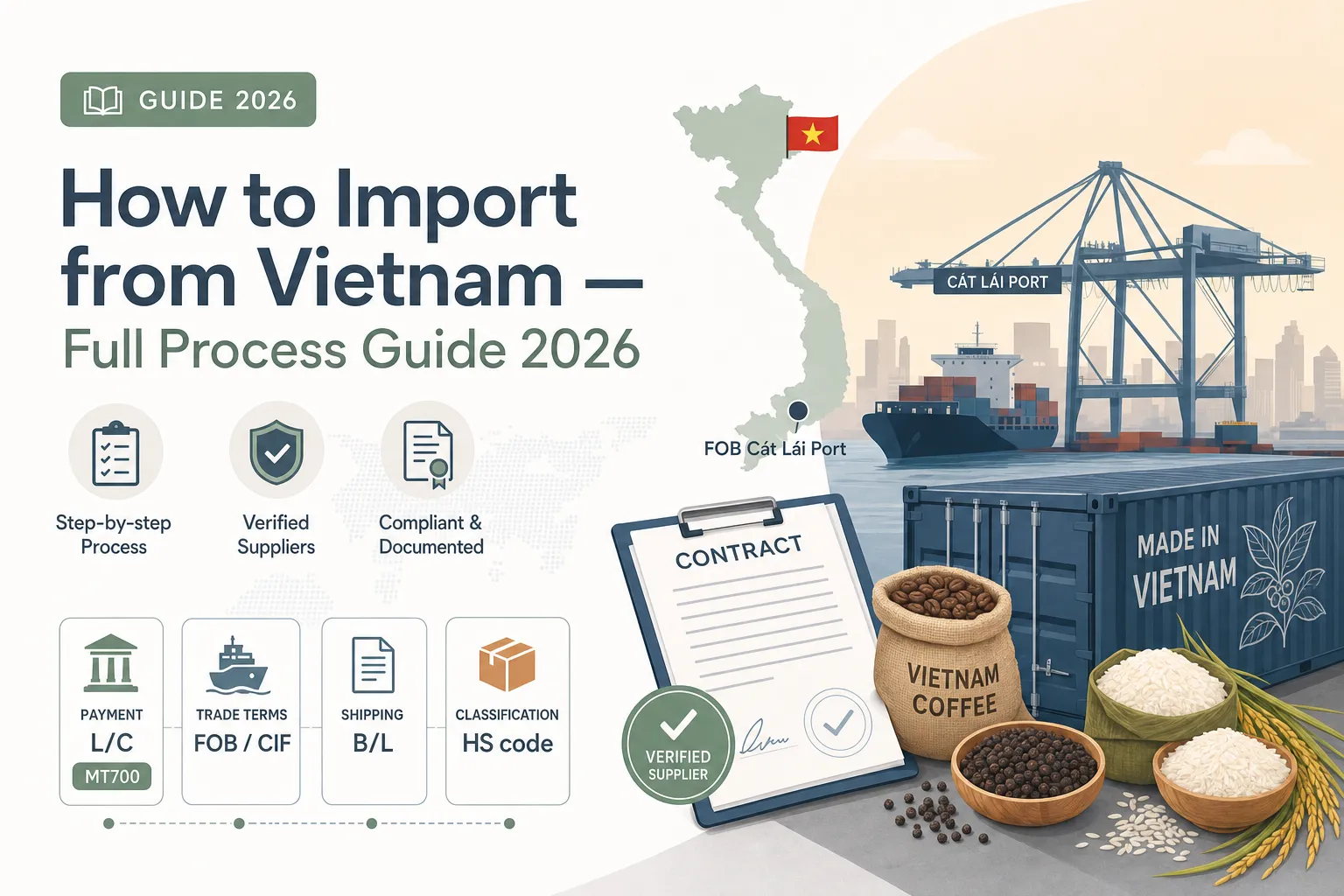
How to import from Vietnam — full process guide starts with supplier verification, HS code checks, Incoterms, documents, freight, customs entry, and payment control. U.S. buyers imported USD 114.4 billion in goods from Vietnam in 2023 (USTR Vietnam trade profile); exports reached 93 percent of Vietnam GDP in 2023 (World Bank Vietnam overview). This guide turns data into an RFQ workflow.
Import goods from Vietnam: the practical workflow
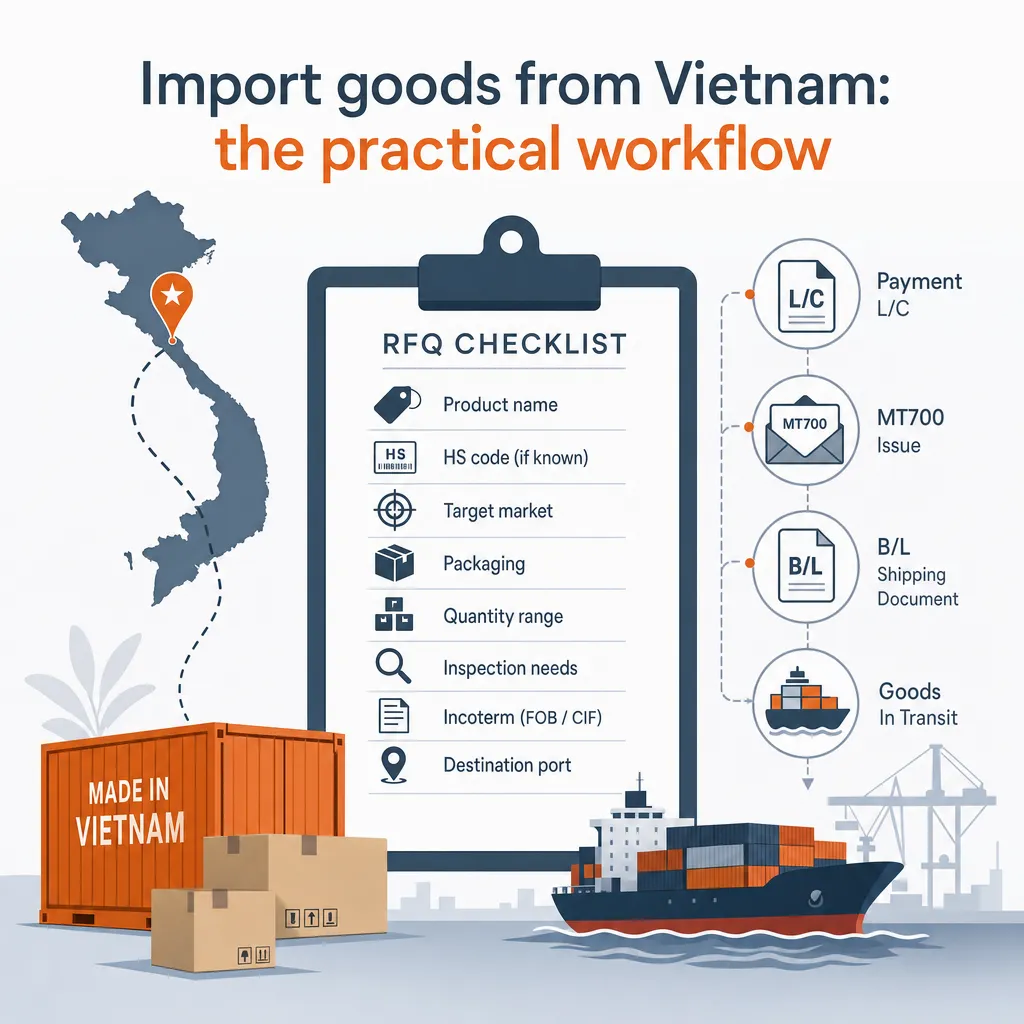
The import process works better when you treat it as a controlled project, not a supplier chat. Start with a clear RFQ: product name, HS code if known, target market, packaging, quantity range, inspection needs, Incoterm, destination port, and preferred payment term. If you source agricultural goods, add crop origin, moisture, defect tolerance, residue limits, and whether the shipment needs a phytosanitary document.
A simple sequence is: - Define product specification and target landed cost. - Shortlist Vietnamese suppliers and request comparable quotes. - Verify business registration, export history, factory photos, and audit records. - Confirm HS code, import restrictions, and buyer-country rules. - Agree Incoterms, payment terms, sample process, and inspection point. - Prepare commercial documents before the vessel departs. - Clear customs, pay duties, receive cargo, and close claims quickly.
For Vietnam-side requirements, the Trade.gov Vietnam import documentation guide is useful because it explains documents, inspection, quarantine, and product quality controls. The Vietnam Briefing customs procedures article adds a plain-language view of permits, declarations, and customs files.
If you want quotes instead of browsing supplier directories, post a Vietnam RFQ with the same specification you would send to a freight forwarder or buying office. ViRFQ routes the request to relevant Vietnamese exporters, so you can compare price, document readiness, sample terms, and response speed in one place.
Vietnam supplier verification before purchase order
Supplier verification is the point where many import projects succeed or become expensive. Do not rely only on a catalog page, trade fair badge, or friendly sales message. Ask for the legal company name in Vietnamese, tax code, export license where relevant, factory or warehouse address, product photos from the current lot, recent export documents with sensitive data redacted, and a named contact for sample handling.
Use a layered check: - Identity: company registration, tax code, website, email domain, and bank beneficiary name. - Product capability: photos, production process, packing line, storage area, and available grades. - Document readiness: commercial invoice, packing list, origin document, bill of lading draft, and product-specific certificates. - Quality control: pre-shipment inspection, sealed sample, retained sample, and claim procedure. - Payment safety: avoid paying a private account when the contract names a company.
For a deeper checklist, use the Vietnam supplier verification checklist before you sign the purchase order. In ViRFQ conversations, buyers can ask the same questions across multiple suppliers and keep the answers attached to the RFQ thread.
Product context matters. Coffee from Đắk Lắk, pepper from Bình Phước, cashew from Bình Phước, rice from the Mekong Delta, and seafood from Cà Mau each have different quality language. If your first category is coffee, read how to import Vietnamese coffee and compare it with Vietnam coffee suppliers before sending samples. Category-specific vocabulary makes supplier answers easier to judge.
Vietnam import documents buyers should request
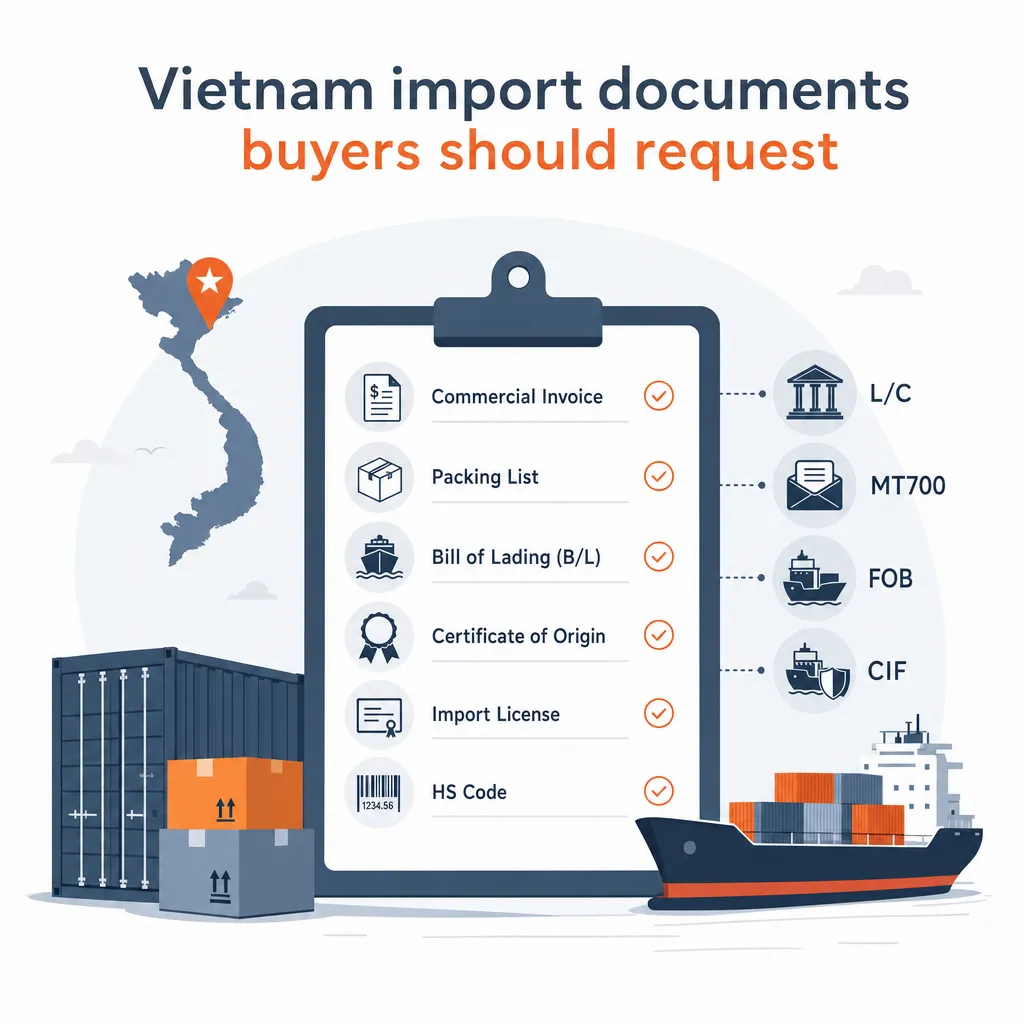
Most import delays come from mismatched documents, not from the vessel itself. Your purchase order should name the exact document set before production or packing starts. For a standard shipment, expect a commercial invoice, packing list, sales contract or proforma invoice, bill of lading or airway bill, certificate of origin when used for tariff preference, and insurance document if the seller arranges cover.
Agricultural goods may need extra files. Plant-origin products can require a phytosanitary document. Food products may require health, residue, labeling, or facility records depending on the destination market. For U.S. plant and plant-product controls, check USDA APHIS plant import guidance. For U.S. entry process basics, CBP importing guidance explains importer responsibilities, entry filing, duties, and recordkeeping.
Ask for drafts early. The commercial invoice checklist should match the buyer name, seller name, product description, quantity, unit price, Incoterm, origin, and currency. The packing list checklist should match carton count, net weight, gross weight, dimensions, and marks. The bill of lading guide is important because consignee, notify party, port, and release type can affect cargo control.
A useful buyer habit is a document control sheet. Put each required file in a row, assign an owner, add the due date, and mark whether the draft has been reviewed. This small step reduces avoidable amendments after cargo leaves Cát Lái, Hải Phòng, Đà Nẵng, or other Vietnam ports.
Shipping from Vietnam, Incoterms, and payment control
Choose the Incoterm based on control, not habit. FOB is common when the buyer wants to choose the forwarder and control ocean freight. CIF can work when the seller has a strong freight option, but the buyer still needs to understand insurance limits and destination charges. EXW gives the buyer broad responsibility inside Vietnam, so new importers usually avoid it unless they have a local logistics partner.
The official ICC Incoterms rules explain how cost, delivery, and loss transfer between seller and buyer. They do not replace the contract. Your contract should still state port, shipment window, document list, inspection rule, late-shipment remedy, and dispute process in plain language. For a buyer-friendly primer, use the Incoterms rules guide before you compare FOB and CIF quotes.
Payment terms should match supplier trust and order size. A common pattern is deposit plus balance against document copy, but it depends on product, relationship, and market practice. L/C at sight can help when the buyer and supplier need bank-controlled documents, although it adds cost and requires precise wording. T/T is simpler, but you need stronger verification and inspection discipline.
ViRFQ helps buyers keep freight, Incoterm, and payment questions visible inside the RFQ discussion. That matters because a cheap unit price can become expensive if destination charges, demurrage exposure, or document amendment fees are ignored.
Customs clearance and landed cost in the destination market
Your import job is not finished when the supplier ships. Before the vessel arrives, confirm customs broker instructions, HS code, duty rate, taxes, product admissibility, labeling, and any inspection appointment. The buyer of record is usually responsible for accurate entry data, so do not leave classification and product description to chance.
Build landed cost before you approve the supplier quote. Include product cost, inland transport in Vietnam when applicable, origin handling, ocean or air freight, insurance, destination terminal charges, customs broker fees, duty, taxes, inspection fees, storage buffer, and local delivery. This helps you compare FOB Vietnam, CIF destination port, and delivered options without mixing unlike costs.
EU buyers should check tariff and product-entry rules in the EU Access2Markets database. The EU-Vietnam trade framework removes duties on more than 99 percent of tariff lines over time, but the exact benefit depends on HS code, origin proof, and product rule. U.S. buyers should coordinate with their customs broker using the CBP guidance cited above.
Keep a post-shipment file with the final invoice, packing list, transport document, origin proof, inspection report, payment record, and customs entry. If quality issues appear, retained samples, photos at unloading, and fast notice to the supplier make the claim discussion more factual. ViRFQ buyers often reuse the same RFQ template for repeat orders, then update only crop, quantity, destination, and document requirements.
FAQ
How do I import goods from Vietnam to the USA?
Start with supplier verification, then confirm the HS code, U.S. admissibility rules, Incoterm, payment term, and document set. Work with a licensed customs broker before cargo departs Vietnam. For food, plants, wood, or animal-origin goods, check the relevant U.S. agency rules before you approve production.
What documents are needed when importing from Vietnam?
Most shipments need a commercial invoice, packing list, sales contract or proforma invoice, transport document, and customs entry data. Depending on the product, you may also need origin proof, phytosanitary paperwork, health documents, insurance, inspection reports, or destination-market permits.
Is FOB or CIF better when importing from Vietnam?
FOB gives the buyer more control over freight, forwarder selection, and destination charges. CIF can be easier for small buyers if the seller has a good freight arrangement. Compare the total landed cost, not only the unit price, before choosing either term.
How can I verify a Vietnam supplier before payment?
Check the company registration, tax code, bank beneficiary, factory or warehouse address, export document samples, product photos, and inspection options. For higher-value orders, use a third-party inspection or request a controlled sample process before paying the main balance.
Can I use ViRFQ to import agricultural products from Vietnam?
Yes. Buyers can submit an RFQ for coffee, pepper, rice, cashew, spices, seafood, fruit, and other Vietnam categories. Include product specs, quantity, destination, Incoterm, and document needs so qualified suppliers can respond with comparable quotes.
If you are ready to source from Vietnam, turn this guide into a live buying brief. Prepare your product spec, target quantity, destination port, Incoterm preference, and document list. Then post a Vietnam RFQ on ViRFQ so verified suppliers can quote against the same requirements. Start with /en/rfq.
Sources
Reviewed by
Founder & CEO, ViRFQ
Phan Hà Thái is the founder and CEO of ViRFQ, the buyer discovery and buyer management platform (and B2B marketplace) for Vietnamese agricultural exporters. His background is in international trade finance and Vietnamese agricultural exports. He writes and reviews the ViRFQ blog analyses on FOB pricing, Letter of Credit (L/C) workflows, EUDR compliance, and supplier verification.
Related articles
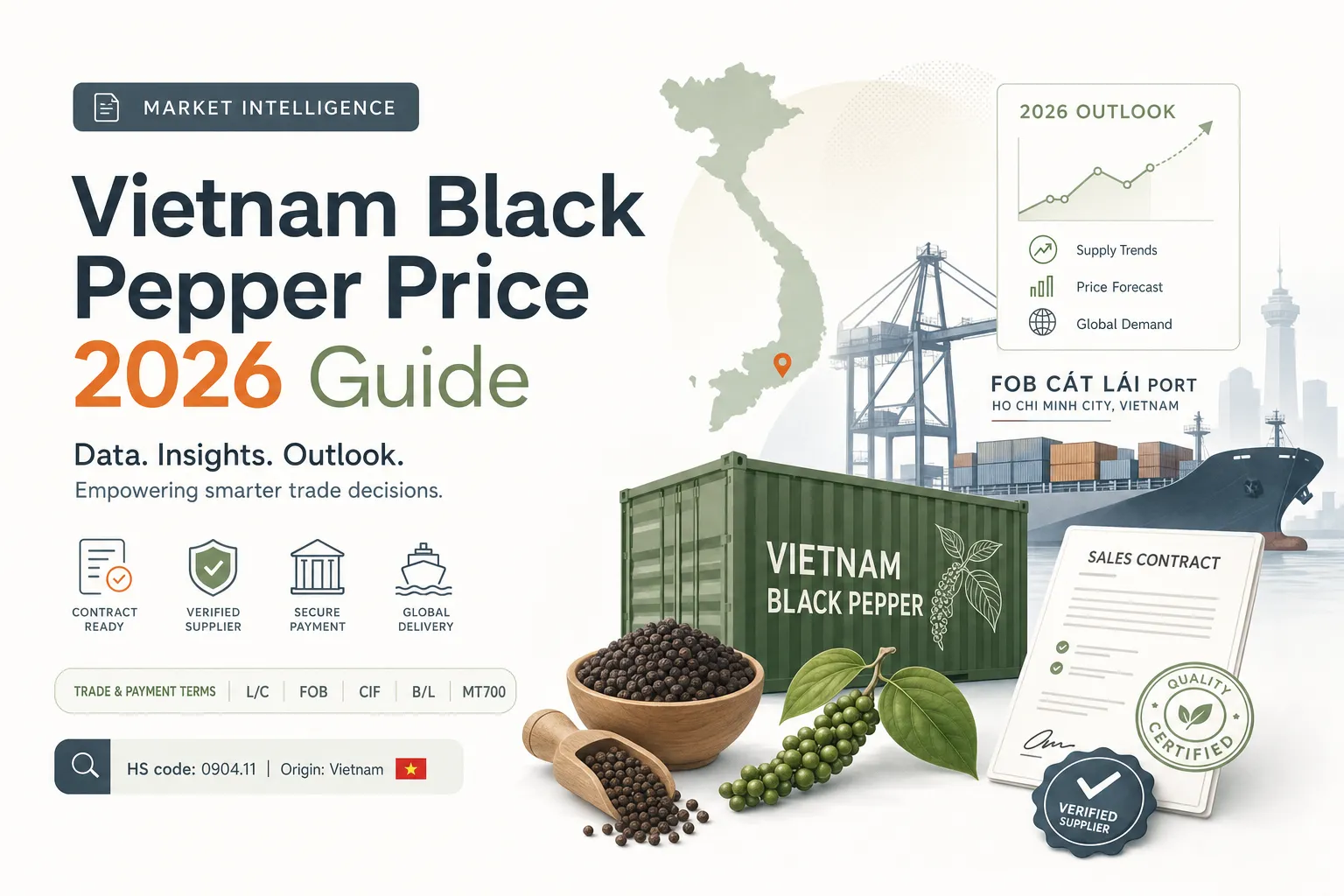
Vietnam Black Pepper Price 2026 Guide
9 phút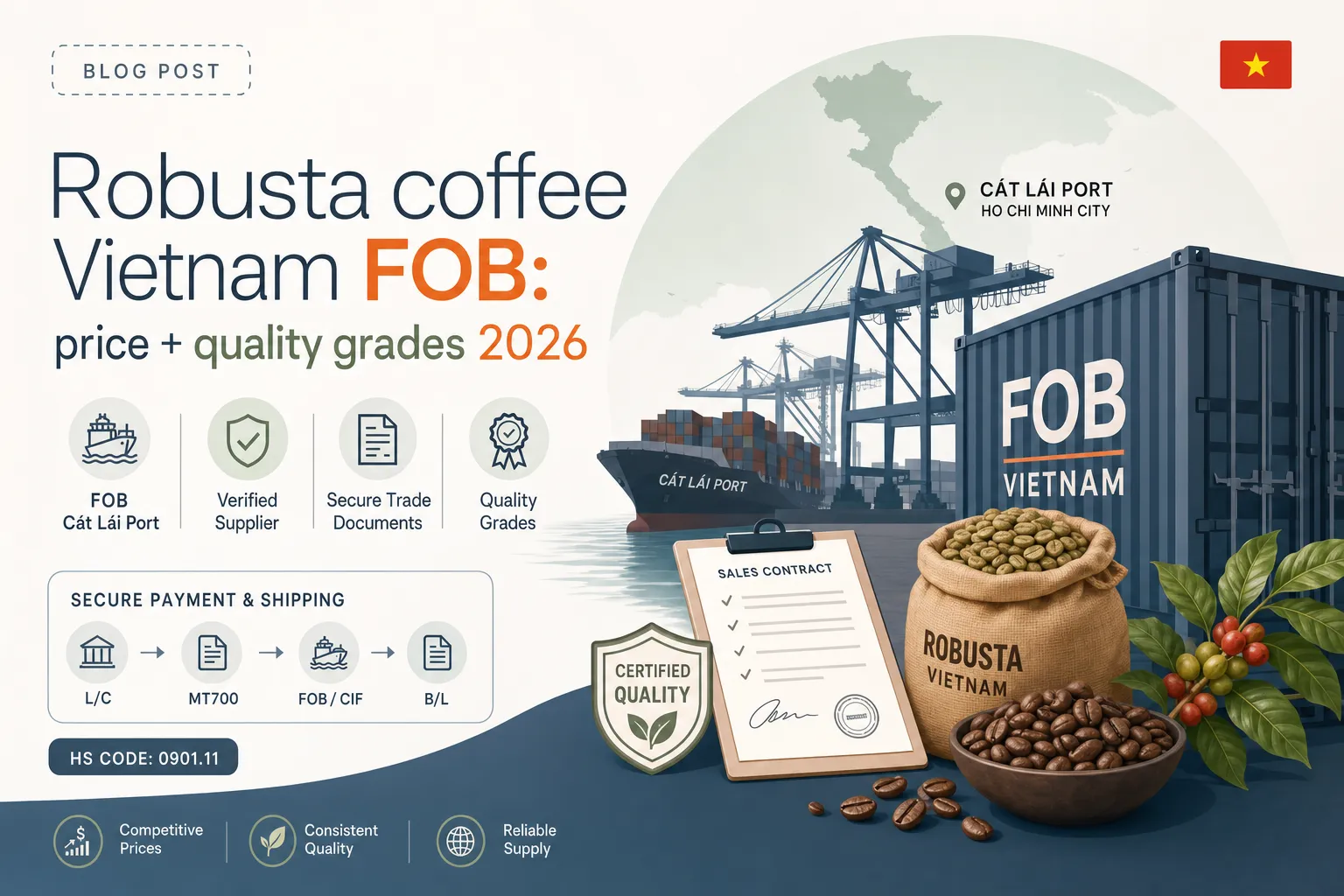
Robusta coffee Vietnam FOB: price + quality grades 2026
9 phút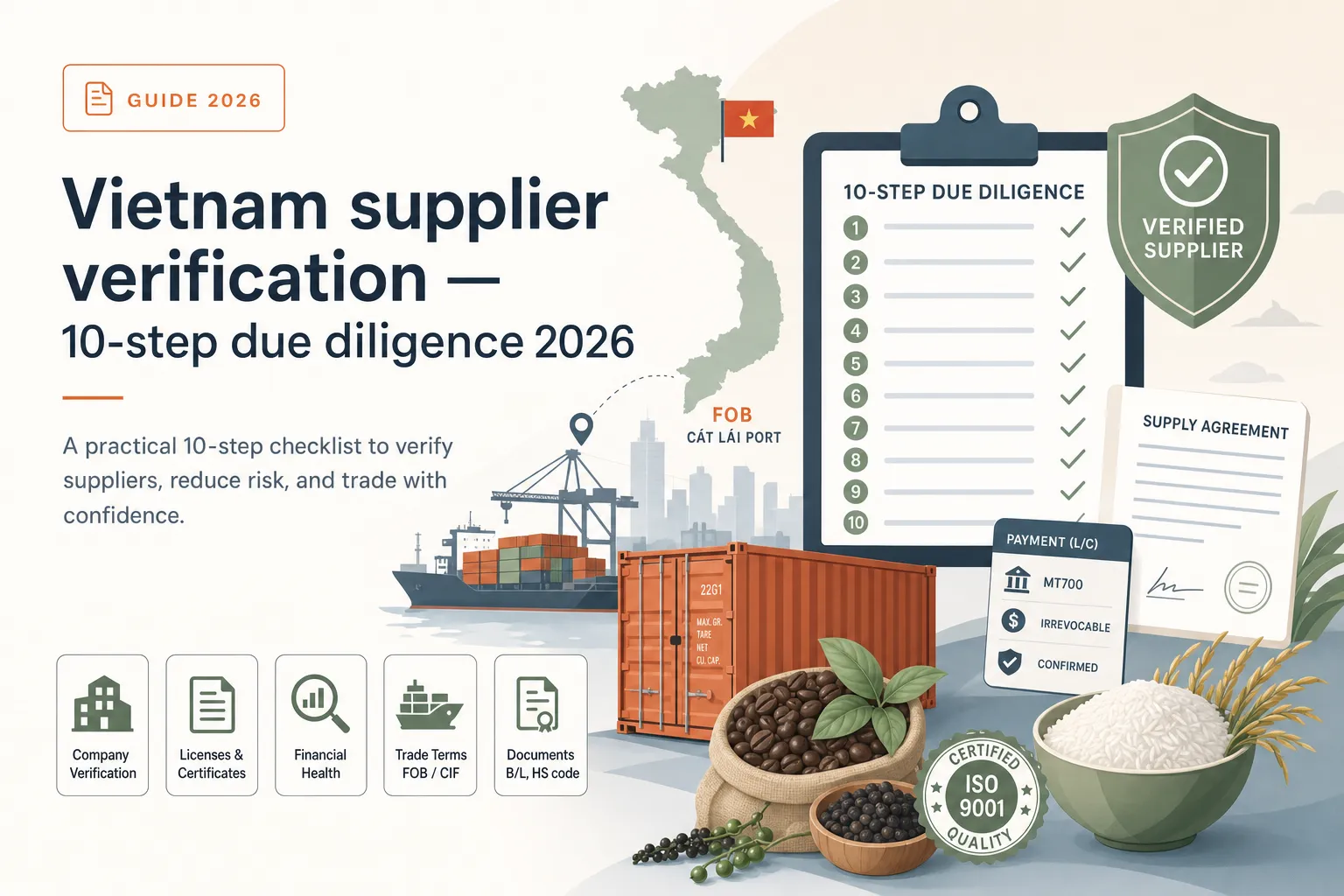
Vietnam supplier verification — 10-step due diligence 2026
9 phút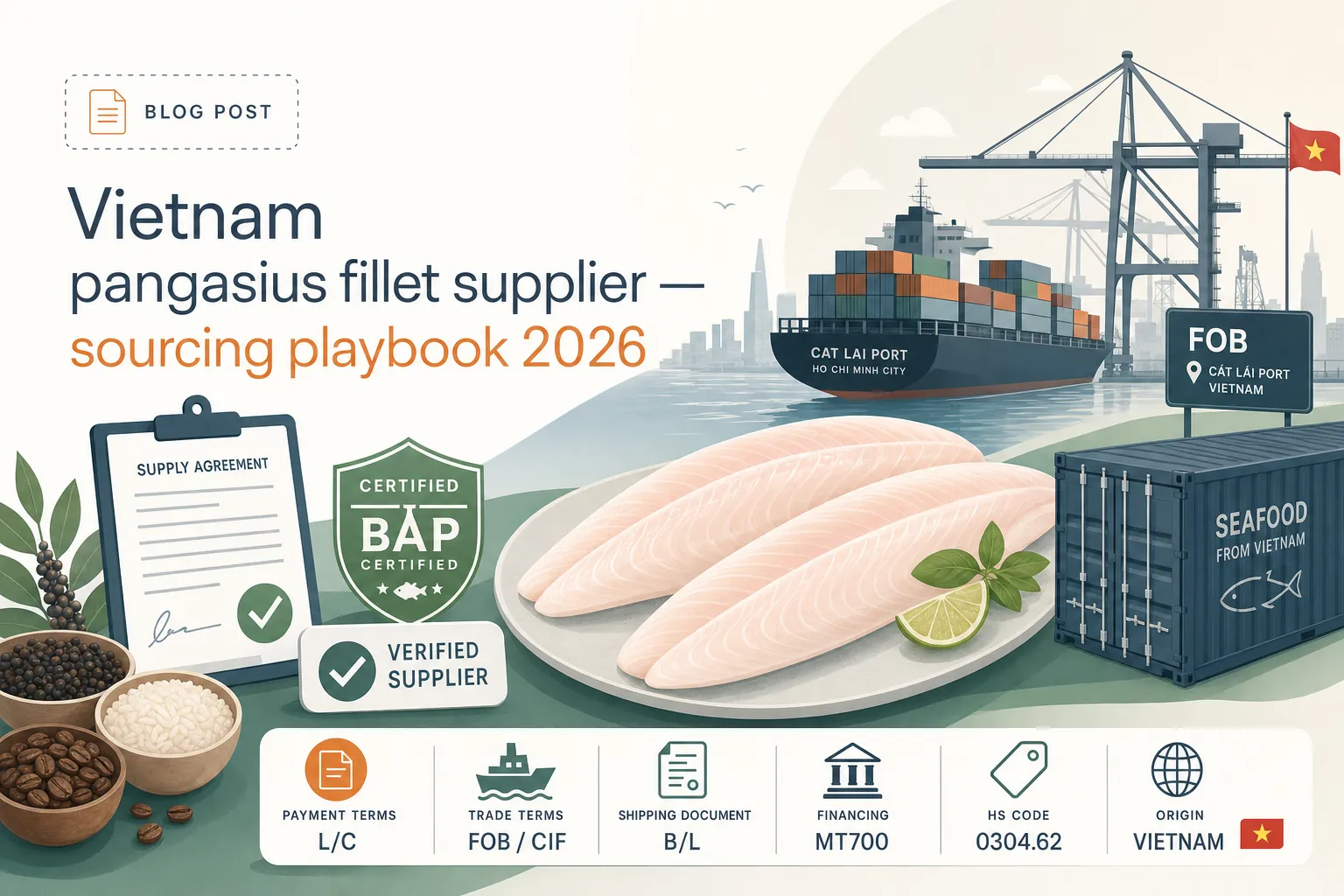
Vietnam pangasius fillet supplier — sourcing playbook 2026
9 phút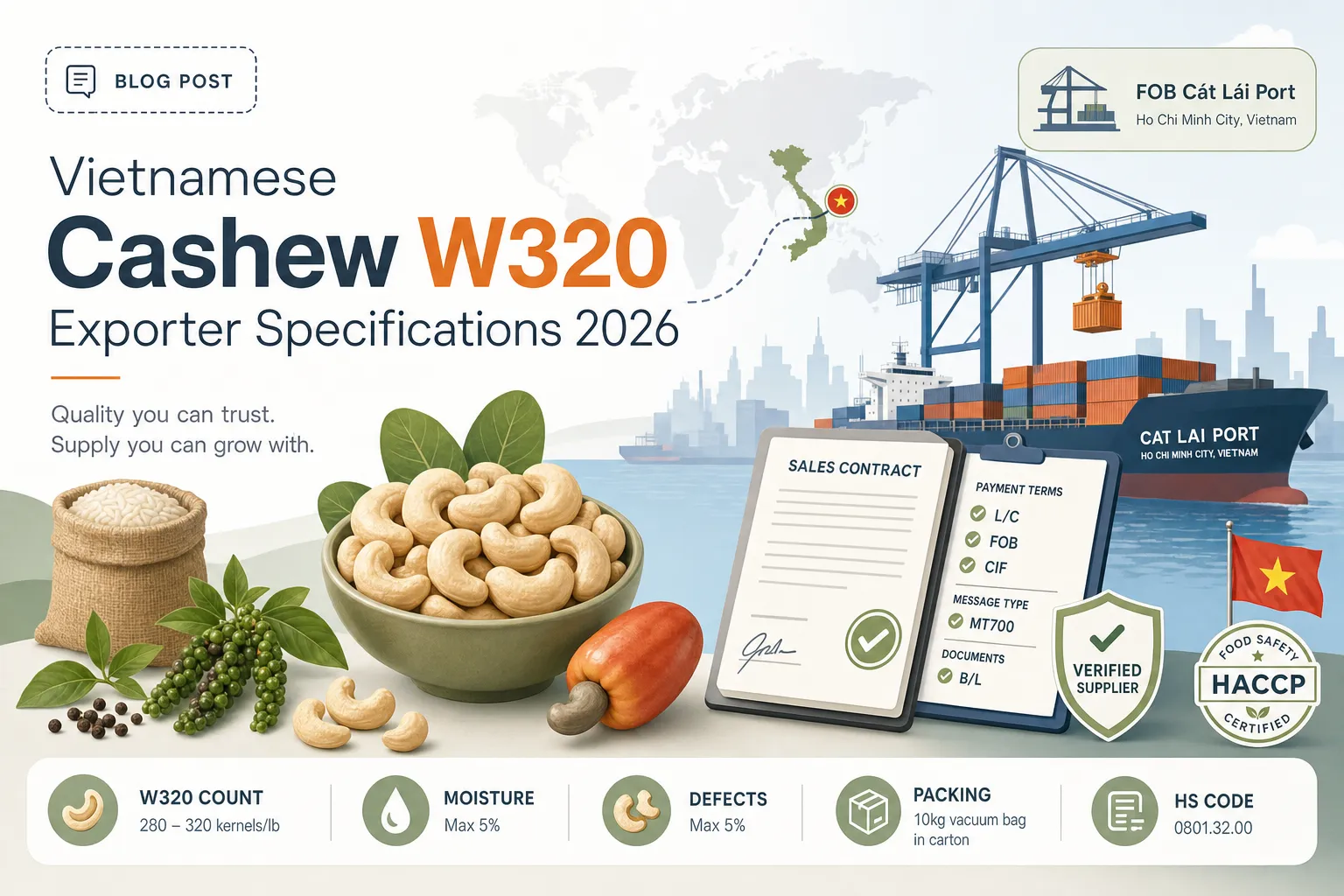
Vietnamese Cashew W320 Exporter Specifications 2026
9 phút