By Hà Thái, Founder of ViRFQ (VIRFQ Technology Solutions JSC)|Published: 7 May 2026|~9 min read
Alibaba Alternative for Vietnam Sourcing — RFQ-First, No Middlemen, Verified Exporters (2026 Guide)
Được duyệt bởi Phan Hà Thái, Founder ViRFQ
TL;DR
International buyers are leaving Alibaba over three persistent pain points: middlemen markups (10-30% inflation), unreliable verification badges, and quality consistency that breaks at scale. With EUDR enforcement landing 30 December 2026 and Vietnam targeting $73-75B in 2026 agricultural exports, RFQ-first specialists like ViRFQ trade Alibaba's catalog breadth for verification depth and zero commission. This guide compares 5 channels and shows where each wins.
If you've sourced from Alibaba in the last 18 months, you've probably hit the same three walls: middlemen markups inflating quotes 10-30%, supplier verification badges that mean less than they should, and quality consistency that doesn't survive the second container. As Vietnam Sourcing Co. analyzed in early 2026, the broad-marketplace sourcing model is losing ground to vertical specialists — especially for buyers who care about ESG compliance, traceability, and direct factory access.
This guide compares the realistic alternatives for sourcing from Vietnam in 2026, explains why an RFQ-first model often beats marketplace-first, and shows where ViRFQ fits in that landscape.
1. Why buyers are looking beyond Alibaba in 2026
The complaints surface in every B2B procurement forum, but three pain points dominate.
Middlemen markups eat 10-30% of your margin
Alibaba's directory is saturated with trading companies dressed as factories. DocShipper's 2026 sourcing guidenotes that buyers routinely waste two weeks messaging 30 suppliers because the quotes aren't comparable — different MOQ ladders, hidden agent fees, and bundled service charges that reveal themselves only after the contract is signed. Real factories often skip Alibaba entirely because of high promotional fees, leaving buyers with the intermediary tier.
Verification badges leak
Gold Supplier status, Trade Assurance, and Verified Manufacturer flags filter out the worst offenders but don't catch the systemic issues. Multiple procurement audits in 2026 have flagged “copied responses from non-factory entities” and badges retained after compliance lapses. Buyers running serious due diligence end up doing the verification themselves anyway.
Quality consistency breaks at scale
First sample matches the spec. Container two shows batch variability. By container four, you're flying QC inspectors out of pocket. The platform model rewards listing volume, not delivery quality.
These aren't new complaints, but the cost of ignoring them changed in 2026 with EUDR enforcement (full effect for large operators by 30 December 2026 per Regulation (EU) 2025/2650) and China's GACC Decree 248/280tightening inspection rules. A non-traceable supplier isn't just a quality risk anymore — it's a regulatory one.
2. The Vietnam sourcing window in 2026
Vietnam is the natural China alternative for buyers re-architecting supply chains, and the 2026 numbers explain why.
| Metric | 2026 Performance | Source |
|---|---|---|
| Q1 2026 agro-forestry-fishery exports | $16.7 billion (+5.9% YoY) | VnEconomy |
| Full-year 2026 agriculture export target | $73-75 billion | Hanoi Times |
| Asia share of agro exports (Q1) | 45.5% | AgTech Navigator |
| Fruits and vegetables growth | +32.1% YoY (Q1) | VnEconomy |
| Total Jan-Feb 2026 exports (all sectors) | $155.7 billion (+22.3% YoY) | Vietnam Law Magazine |
The Ministry of Industry and Trade (MOIT) has been pushing B2B agricultural exchanges starting in 2026 specifically to reduce intermediaries between Vietnamese producers and global buyers. The shift is structural, not promotional.
What this means for buyers: more direct-from-factory inventory available than ever, plus a regulatory environment finally pushing platforms to verify suppliers properly. The catch is finding the right channel.
3. Five Vietnam B2B platforms compared (2026)
Here's the realistic landscape of channels for sourcing Vietnamese suppliers, with the trade-offs each carries.
| Platform | Model | Best for | Watch out for |
|---|---|---|---|
| Alibaba.com | Open marketplace, listing-first | Discovery, low-MOQ samples | Middlemen, weak verification |
| Global Sources | Hybrid online + trade fair | Electronics, fashion, gifts | Subscription cost, trade-show centric |
| Tridge | Agricultural intelligence + sourcing | Coffee, cashew, pepper market data | Less direct supplier match for specific RFQs |
| EC21 | Korean-origin B2B marketplace | Multi-category Asian sourcing | Generic aggregation, weak buyer differentiation |
| ViRFQ | RFQ-first, Vietnam-only verified exporters | Verified RFQ workflow, zero commission | Newer entrant, smaller catalog than Alibaba |
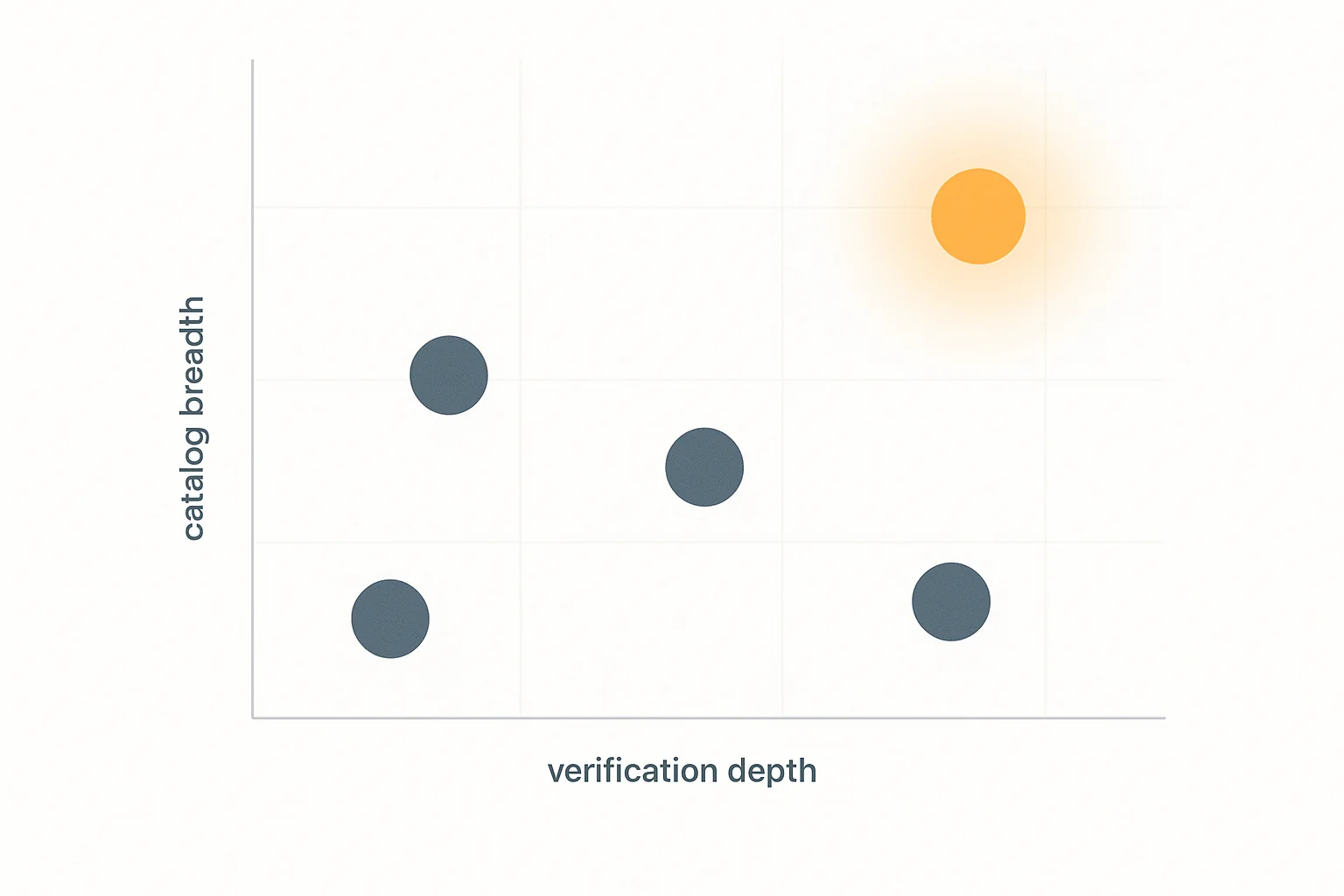
The pattern: broad marketplaces sacrifice depth for breadth, and vertical specialists do the opposite. There is no single platform that wins for every buyer profile. The right choice depends on whether you're discovering categories, comparing market intelligence, or sourcing a specific product against a verified RFQ.
4. How an RFQ-first model solves the three pain points
If middlemen markups, verification gaps, and quality variability are the three Alibaba pain points, ViRFQ's RFQ-first model addresses each one structurally rather than through bolted-on trust signals.
Against middlemen markups
Every supplier on ViRFQ is a Vietnam-registered exporter, and suppliers carrying the Verified badge have passed a manual document review. There's no listing fee for suppliers, no commission on transactions, and no platform middleman taking a margin. The quote you receive is the quote the factory wrote. Buyers report that this alone often closes the 10-30% markup gap they accepted on Alibaba.
Against verification gaps
Verification on ViRFQ is a document workflow, not a self-declared badge: a supplier earns the Verified badge only after a manual review covering business registration through MOIT's National Business Registry, validated export track records (the last 24 months of shipments, cross-checked against Customs.gov.vn public data), quality certifications relevant to the product line (HACCP, GLOBALG.A.P., ISO 22000, BRC, IFS where applicable), and the team screens each RFQ (quality score ≥80) before it reaches exporters. The 2026 sourcing best-practice from JTM Asia's overview recommends exactly this combination of registry checks plus customs history plus pilot orders — ViRFQ bakes the first two into the platform.
Against quality consistency
RFQ-first sourcing flips the negotiation. Instead of selecting from a catalog, the buyer specifies exact specs (grade, moisture %, container type, Incoterms, destination port, delivery window, payment terms) before suppliers respond. Quotes come back already aligned to those specs, which means batch-to-batch consistency starts at the contract level. Most ViRFQ buyers receive 3-5 qualified quotes within 24-48 hours of submitting an RFQ — every quote already addresses the same spec.
5. The 2026 verification checklist every buyer should run
Whatever platform you choose, the verification work doesn't disappear. Here's the five-step checklist that aligns with MOIT regulations and works regardless of which channel you're sourcing through.
- Confirm legal registration— Search the supplier's Enterprise Identification Number on MOIT's National Single Window portal. An active status, current tax compliance, and an industry-specific registration matching their claimed product line are non-negotiable. A supplier without an EIN you can verify is a non-starter for any export above sample volumes.
- Validate export certifications — Request the Certificate of Origin (Form AI/E/AK depending on destination), phytosanitary certs for agricultural products, and any product-specific quality certs (HACCP, GLOBALG.A.P., USDA Organic). Verify them through the Vietnam Trade Office digital verification tool, which has been mandatory for export documents since the 2025 digital reforms.
- Cross-check customs history— Customs.gov.vn's public e-Customs portal shows HS-code-level shipment records for the past three years. A supplier claiming 500-ton annual coffee exports should be visible in that data. If they aren't, ask why before you sign anything.
- Run a pilot order— Place a small pilot at 10-20% of intended full volume. The goal isn't to save money on the first order; it's to test communication, timeline adherence, and batch quality under real conditions. Two parallel pilots from two suppliers gives you a comparison baseline.
- Verify financial standing— For deals above $50,000, require a Letter of Credit verified through Vietnam's State Bank system or a third-party escrow. Tax clearance from the General Department of Taxation is publicly checkable through MOIT's portal.
The full checklist takes 4-12 weeks for a serious supplier qualification, and that's true on every platform. RFQ-first platforms like ViRFQ accelerate steps 1-3 because that verification is already done before the supplier appears in your RFQ matches; the buyer focuses time on steps 4-5.
6. What an RFQ looks like in practice
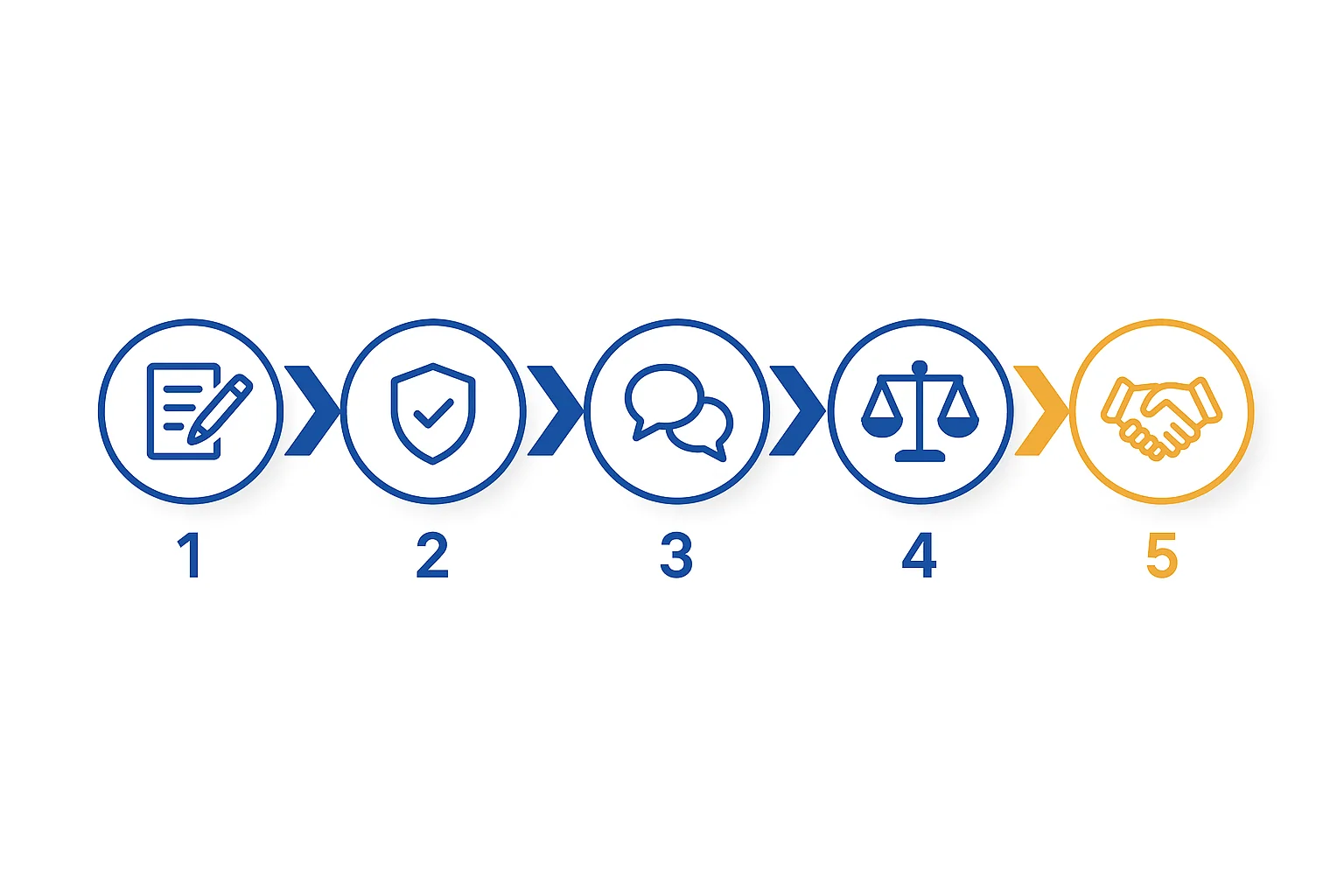
A representative ViRFQ buyer flow runs like this. A specialty roaster in Germany needs Robusta G1 Screen 18 from Vietnam— 2 × 20-foot containers, max 12.5% moisture, max 5% defects, FOB Ho Chi Minh, Q3 2026 shipment. They submit the RFQ in about 3 minutes through ViRFQ's form. Within 24 hours, the request is published only to verified Vietnamese coffee exporters whose registered product range matches the spec. Within 48 hours, 3-5 of those exporters reply with quotes, sample availability, and shipping documentation. The buyer compares apples-to-apples — same spec, same Incoterm, same delivery window — and chooses based on price, supplier export track record, and sample feedback. No middleman, no commission, no opaque markup ladder.
The same model works for pepper (ASTA 550, ESA-compliant), cashew (W320 grade, G1 quality), spices (cassia cinnamon, star anise), seafood (pangasius fillet, shrimp), and fruits (durian, dragon fruit, mango). Each category has manually verified Vietnamese exporters on the platform, with the buyer-facing experience optimized for the RFQ workflow rather than catalog browsing.
Frequently asked questions
Is ViRFQ free for international buyers?▼
Yes — submitting RFQs and receiving quotes is free for buyers, with no registration required and no commission on completed deals. Suppliers pay tier-based subscription fees that don't pass through to buyer pricing.
How is ViRFQ different from Alibaba?▼
The two main differences are scope and model. ViRFQ is Vietnam-only with manual supplier verification and RFQ-first matching. Alibaba is global with self-service listing and supplier-pays-for-visibility. ViRFQ trades catalog breadth for verification depth and zero commission.
Does ViRFQ handle EUDR or GACC compliance documents?▼
Yes — for products subject to EUDR (coffee, rubber, cocoa, soy, wood) ViRFQ surfaces supplier-provided geo-location and traceability documentation as part of the RFQ response. For GACC-regulated exports to China (Decree 248 warehouse registration, Decree 280 inspection), the platform flags suppliers with current GACC compliance.
How fast do buyers receive quotes?▼
The platform median for verified RFQs is 24-48 hours from submission to first qualified quote. Most buyers receive 3-5 quotes within that window for high-demand categories like coffee, pepper, and cashew.
Can I source non-agricultural products through ViRFQ?▼
Currently ViRFQ focuses on Vietnamese agricultural exports — coffee, pepper, cashew, spices, rice, seafood, and fruits — where the verification model has the strongest signal. Manufactured goods (textiles, electronics) are better served by hybrid platforms like Global Sources for now.
Try sourcing with a verified RFQ
If you've been sourcing on Alibaba and the same three pain points keep recurring, the cheapest test is to submit one parallel RFQ on a specialized Vietnam platform and compare the response. ViRFQ's RFQ form is free, no registration required, and the first qualified quotes typically arrive within 48 hours.
The full verification work doesn't disappear regardless of platform, but the right channel can compress the early-stage verification from weeks into hours, and that compounds across every order you place in 2026.
Submit a free RFQ →📚 Related — Vietnam sourcing cluster
Written by Hà Thái, Founder of ViRFQ (VIRFQ Technology Solutions JSC). 14 years in Vietnamese agricultural exports across coffee, cashew, and pepper.
Reviewed by
Founder & CEO, ViRFQ
Phan Hà Thái is the founder and CEO of ViRFQ, the buyer discovery and buyer management platform (and B2B marketplace) for Vietnamese agricultural exporters. His background is in international trade finance and Vietnamese agricultural exports. He writes and reviews the ViRFQ blog analyses on FOB pricing, Letter of Credit (L/C) workflows, EUDR compliance, and supplier verification.