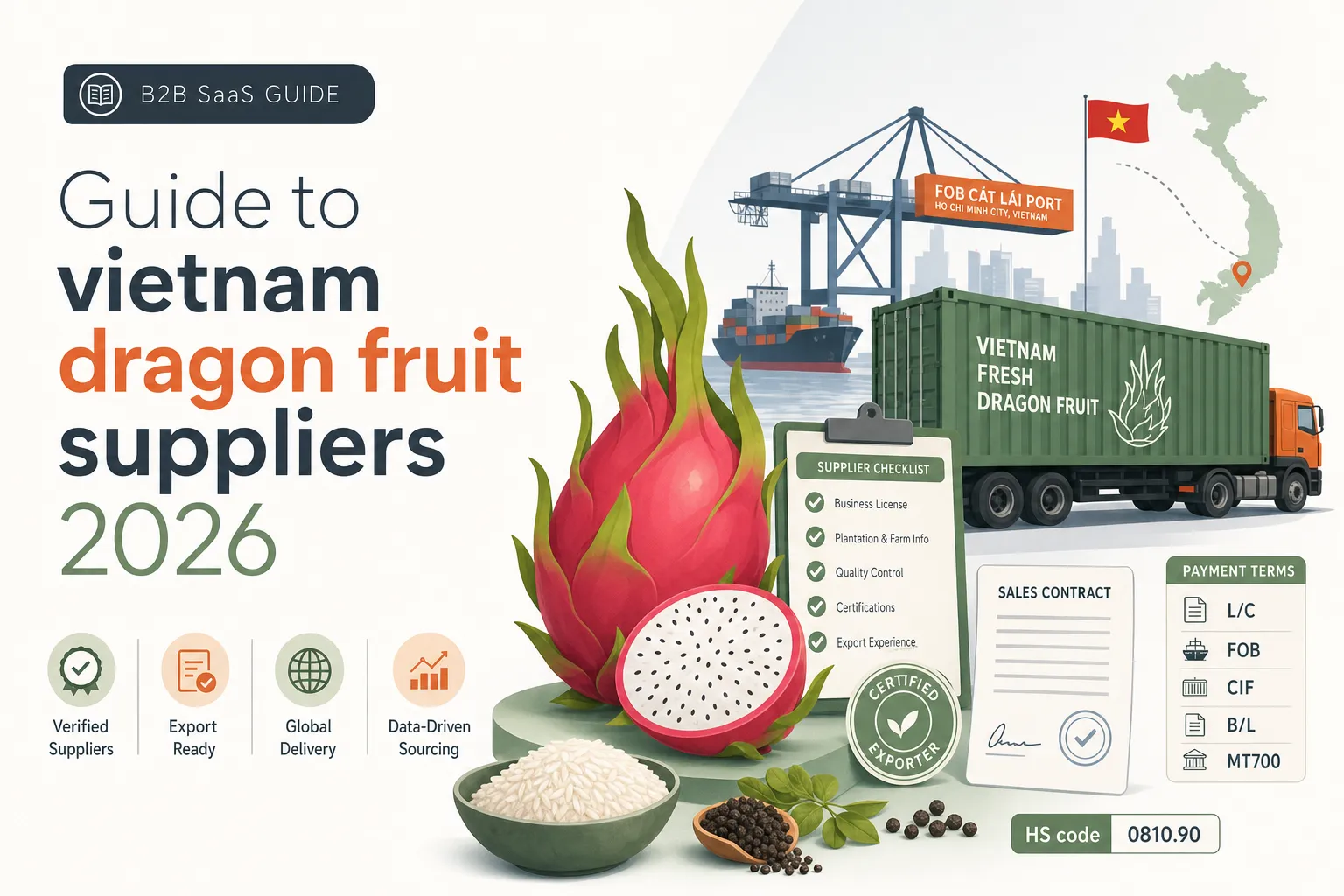
Vietnam Fruits Suppliers Guide 2026
Reviewed by Phan Hà Thái, Founder ViRFQ
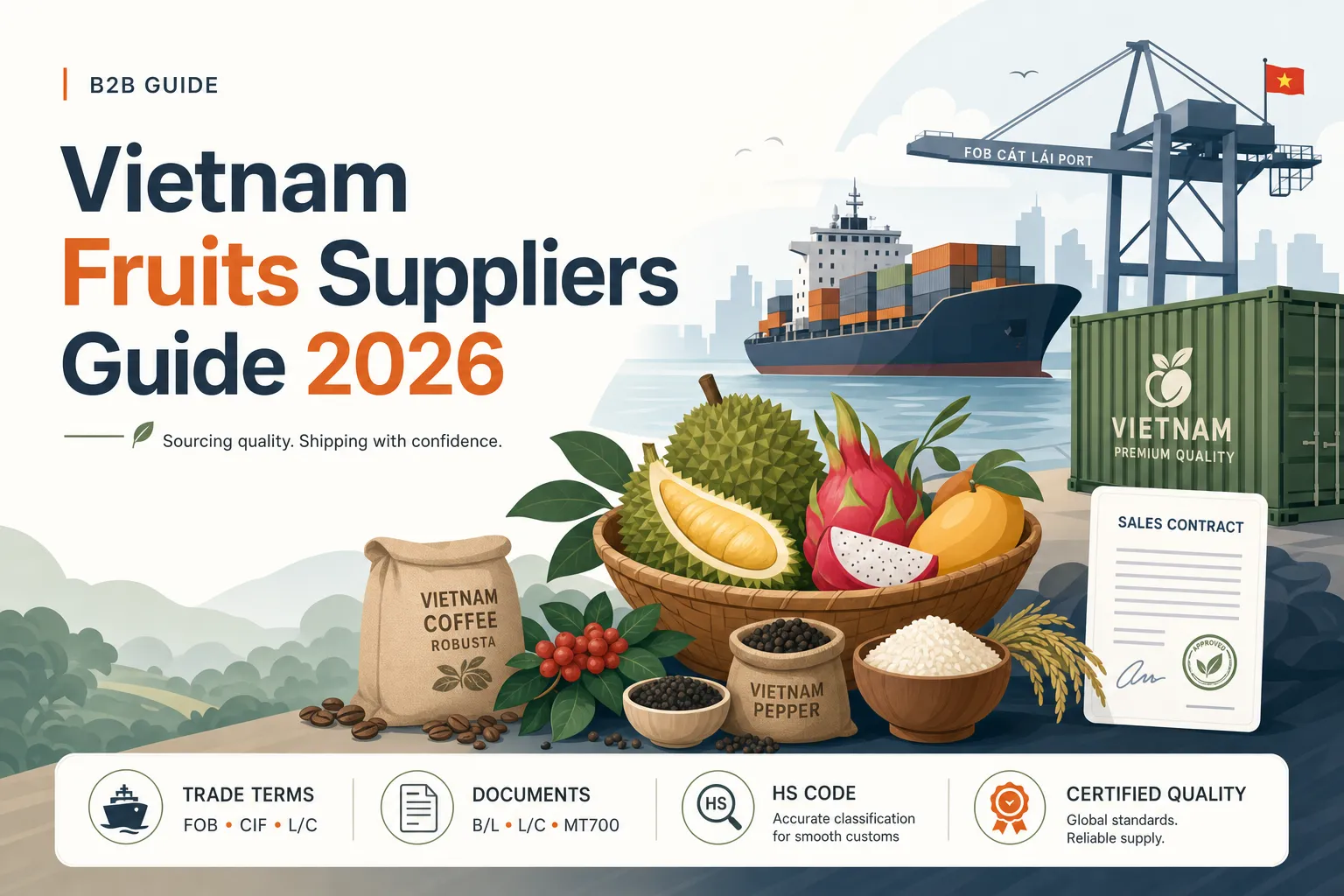
vietnam fruits suppliers are a strong option for mango, dragon fruit, coconut, banana, durian, and frozen IQF fruit: fruit and vegetable exports exceeded USD 7 billion in 2024, per Vietnam Customs, while Vietnam ranked 43 in the 2023 World Bank LPI. This guide focuses on verification, seasonality, documents, and RFQ execution.
Why international buyers source fruit from Vietnam
Vietnam fruits suppliers serve a wide buyer base because the country combines tropical climate zones, improving packing capability, and practical port access from Ho Chi Minh City, Hai Phong, Da Nang, and Cai Mep. For buyers in the EU, USA, MENA, Korea, and Japan, the main attraction is not just farm-gate availability. It is the ability to source fresh, frozen, dried, and puree formats from one origin.
The export signal is visible in official trade reporting. Fruit and vegetable exports exceeded USD 7 billion in 2024, according to Vietnam Customs. The MARD agriculture portal also tracks fruit as a major part of Vietnam’s agricultural export mix, with durian, dragon fruit, banana, mango, coconut, and processed fruit drawing buyer attention. Production depth is supported by the FAOSTAT crops database, which helps buyers cross-check whether a fruit category is broad-based or limited to seasonal clusters.
The SERP gap is clear: many supplier pages show product photos, but they rarely explain how to qualify a factory, compare shipment terms, check residue controls, and structure an RFQ. That is where a sourcing playbook helps. A buyer should not shortlist only from a directory entry or social post. You need exporter identity checks, facility evidence, packing details, sample handling, and payment terms before placing a purchase order.
ViRFQ supports that workflow by letting buyers describe fruit specs once, then receive comparable quotes from Vietnamese suppliers. If you are still deciding whether to use a marketplace or direct search, the article on how to compare ViRFQ vs Alibaba sourcing explains the RFQ-first difference.
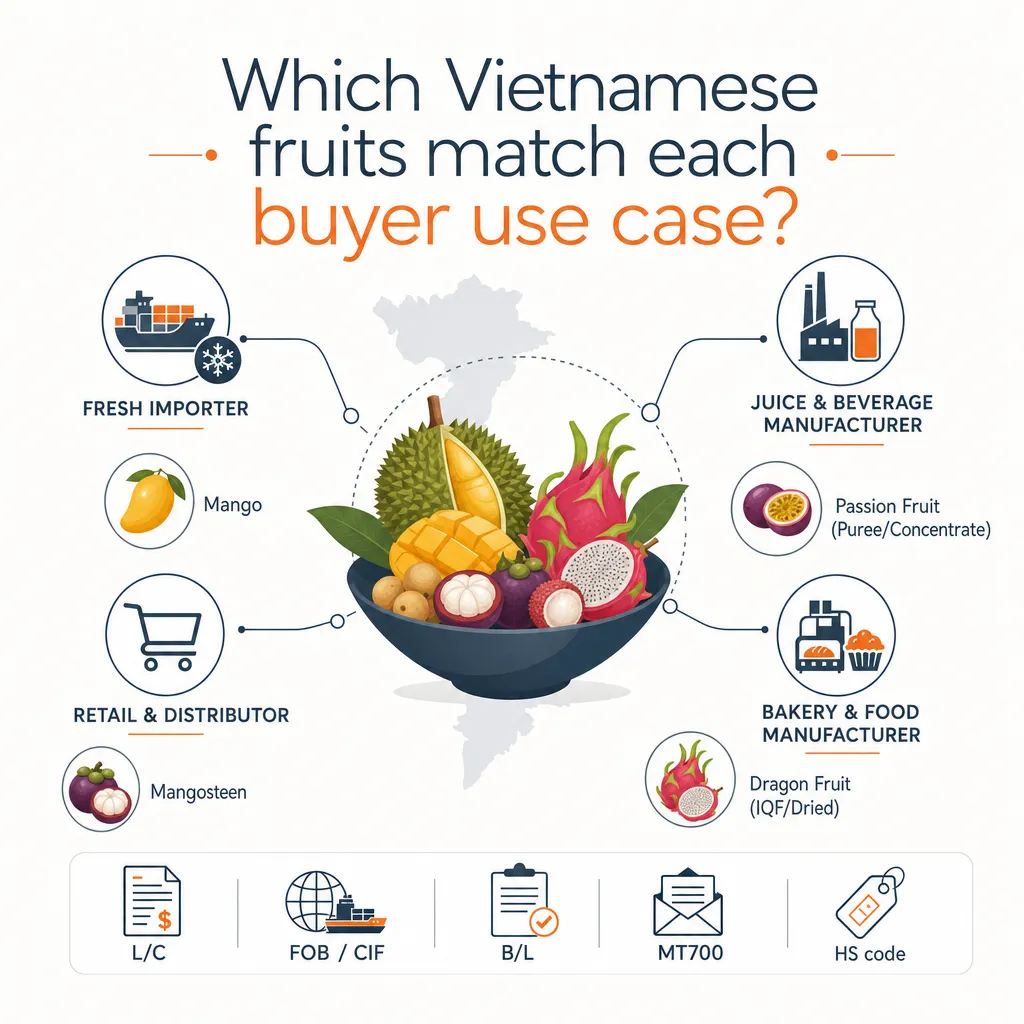
Which Vietnamese fruits match each buyer use case?
The right supplier type depends on your use case. A fresh importer needs shelf-life discipline and cold-chain records. A juice or bakery manufacturer needs puree, concentrate, dried fruit, or IQF formats with repeatable Brix, size, color, and defect tolerances. A foodservice buyer may value cartons, private label packs, and mixed-container options.
Use this quick matrix before contacting Vietnam fruit exporters:
| Buyer need | Fruit categories to check | Supplier profile |
|---|---|---|
| Fresh retail | dragon fruit, mango, coconut, banana, pomelo | exporter with packing house and cold-chain partners |
| Wholesale market | mixed tropical fruit, seasonal durian, longan, rambutan | trader-exporter with farm network and daily availability checks |
| Food manufacturing | frozen mango, passion fruit, pineapple, dragon fruit, banana | processor with IQF, puree, or drying line |
| Private label | dried mango, coconut chips, fruit snacks | processor with packaging line and artwork review process |
| Foodservice | coconut, lime, banana, frozen fruit pulp | exporter that can handle repeat small lots and stable specs |
Fresh dragon fruit and mango buyers should ask for maturity index, packing date, carton weight, pallet pattern, and target transit time. Coconut buyers should separate young coconut, mature coconut, desiccated coconut, and coconut water because they use different supplier pools. Durian buyers should clarify fresh whole fruit, frozen pulp, or frozen whole fruit from the first message.
For processed fruit, ask for a technical specification sheet before pricing. A good sheet lists ingredients, origin, process flow, storage temperature, shelf life, packaging, and inspection points. For trade context, ITC Trade Map is useful for checking export flows by fruit category, while USDA GAIN search can help buyers monitor market access and crop reports for Vietnam and destination markets.
How to verify Vietnam fruit exporters before paying
Supplier verification is the step that separates a serious RFQ from a blind inquiry. Start with legal identity. Ask for the registered company name, tax code, address, export license where applicable, and the person authorized to sign the proforma invoice. Match those details against the email domain, bank beneficiary, invoice header, and bill of lading party.
Next, verify operational capability. A supplier that claims to export fresh mango should be able to show packing-house photos, sorting line details, carton specs, and a sample export document set with sensitive information redacted. A processor should provide process-flow evidence, product specification sheets, food safety certification details where relevant, and recent third-party audit records. Avoid vague answers such as “we can supply all fruits all year” unless the supplier explains sourcing regions and seasonal constraints.
Use a structured due diligence file:
- Company registration and tax identity
- Export product list with monthly availability
- Facility photos or audit summary
- Sample proforma invoice and packing list
- Bank account name matching the supplier entity
- References from similar destination markets, where available
- Complaint process for short weight, decay, temperature abuse, or document errors
If you need a deeper checklist, read the Vietnam supplier verification guide. It covers identity checks, red flags, bank mismatch issues, and inspection options.
ViRFQ encourages buyers to ask the same questions to every shortlisted exporter. Standardized questions make quotes comparable and reduce misunderstandings. They also help suppliers respond faster because the commercial, logistics, and compliance requirements are clear from the start.
Seasonality, regions, and cold-chain questions to ask
Vietnam’s fruit supply is regional. The Mekong Delta is important for mango, coconut, pomelo, longan, rambutan, and durian. Binh Thuan is strongly associated with dragon fruit. The Central Highlands and Southeast provinces are relevant for durian, banana, and passion fruit supply chains. Northern provinces add lychee and longan seasonality.
Ask suppliers for a seasonal calendar by fruit and province. Do not accept a generic “available year-round” answer without detail. Some fruits have main crop and off-season windows. Quality, size distribution, and price can change quickly during rain, heat, or holiday logistics periods. If your buyer program needs weekly shipment stability, you need backup farms, backup packing capacity, and a clear substitution policy.
Cold-chain questions should be specific:
- What is the pre-cooling method after harvest?
- What carton ventilation is used?
- What loading temperature is targeted?
- Who records temperature before stuffing?
- Can the supplier support a reefer data logger?
- What is the claim process for arrival temperature deviation?
For frozen fruit, ask whether the product is IQF cubes, chunks, puree, pulp, or whole frozen fruit. Confirm storage temperature, loading process, and thaw tolerance. For dried fruit, clarify moisture, sulfite status where relevant, sugar addition, oil use, and packaging barrier.
The OECD-FAO Agricultural Outlook is useful for understanding broader demand pressure in food and agriculture. For Vietnam-specific agricultural policy and crop information, cross-check updates from MARD. A practical buyer also keeps a supplier-by-season scorecard, not just a one-time approved vendor list.
Documents and compliance for importing fruit from Vietnam
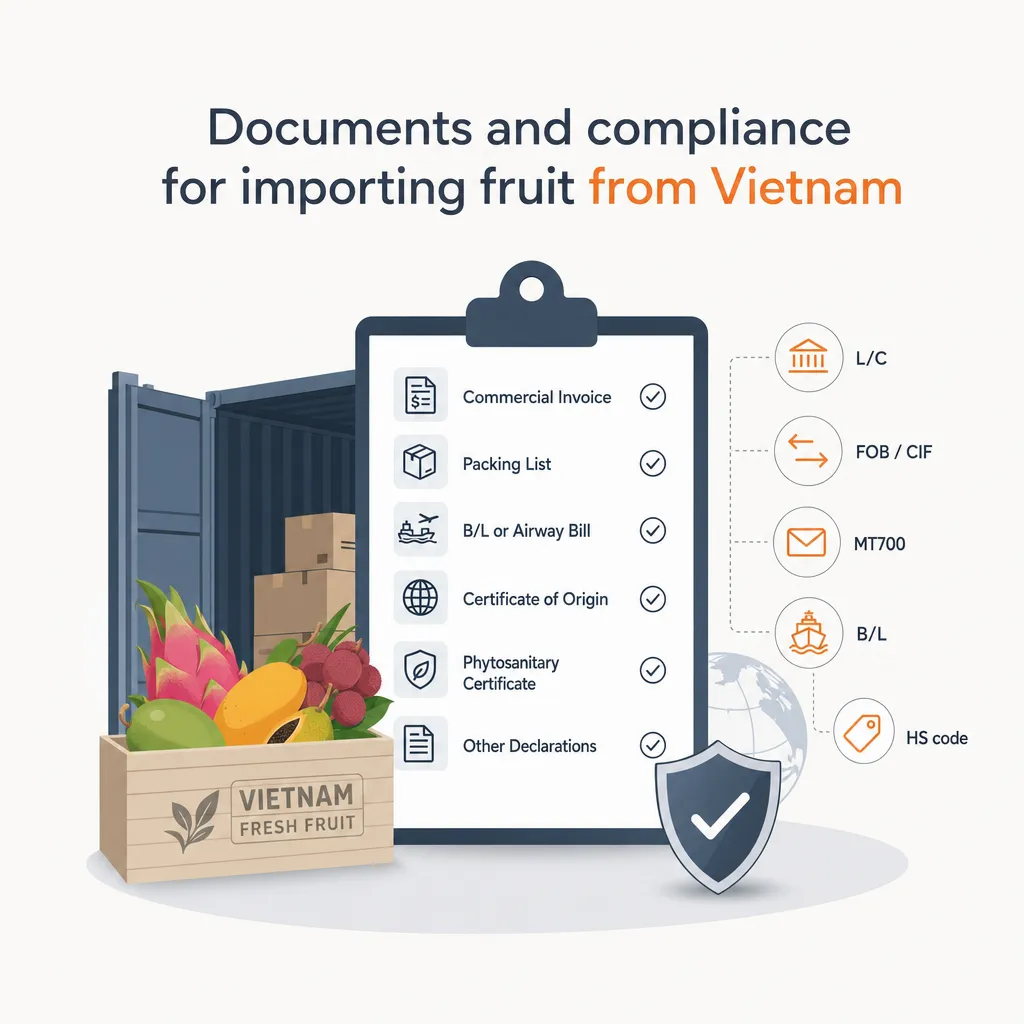
Fresh fruit is document-sensitive. The basic export pack usually includes commercial invoice, packing list, bill of lading or airway bill, certificate of origin if requested, phytosanitary certificate for regulated plant products, and any destination-specific declarations. Processed fruit may add health-related documents, ingredient declarations, lab tests, and packaging statements.
For plant health, the international reference point is the IPPC phytosanitary resources. Destination countries use these rules to manage pests and quarantine requirements. Buyers should confirm whether their fruit requires orchard registration, packing-house approval, cold treatment, irradiation, or pre-export inspection. Requirements differ by fruit and destination, so do not reuse a mango checklist for durian or coconut without checking.
Food safety is separate from plant health. The WTO SPS Agreement explains how sanitary and phytosanitary measures are used in trade. For pesticide residue checks, the Codex pesticide residue database is a helpful reference, but importers must still follow their destination market rules.
The EU’s deforestation rules are not aimed at most fruit categories, but they can matter if a shipment includes covered commodities or mixed product claims. If you sell into the EU, read the EUR-Lex EUDR text and confirm scope with your compliance team.
For documentation basics, the fruit export documentation checklist, phytosanitary certificate guide, and commercial invoice guide are useful internal references before you send an RFQ.
Pricing, Incoterms, and RFQ structure
Fruit pricing is sensitive to grade, season, packing, route, and payment term. A vague request such as “send mango price” will attract vague quotes. A strong RFQ tells suppliers exactly what to price, what documents to include, and which trade term to use.
A buyer RFQ should include:
- Fruit name and variety, if known
- Fresh, frozen, dried, puree, or juice format
- Grade, size count, Brix, color, defect tolerance, or maturity target
- Carton weight, inner pack, pallet preference, and private label need
- Quantity per shipment and shipment frequency
- Destination port or airport
- Preferred trade term such as FOB, CFR, or CIF
- Required documents and lab tests
- Sample request and deadline
- Payment term preference
Use the ICC Incoterms rules to align responsibility for freight, insurance, and handover. FOB is often useful when the buyer controls ocean freight. CIF can be simpler for a new importer, but you must compare freight assumptions carefully. Air freight may suit high-value samples or urgent retail windows, while reefer ocean freight is more common for larger fresh programs.
Payment terms should match trust level. For a first shipment, many buyers use deposit plus balance against documents, escrow support, or a documentary credit with clear document wording. The letter of credit guide explains why document wording matters.
ViRFQ makes this easier because you can structure the RFQ once, then ask suppliers to quote against the same specification. That gives you a cleaner comparison than collecting different price sheets by email.
Ports, logistics, and inspection workflow
Vietnam fruit logistics usually move through Ho Chi Minh City area ports, Cai Mep, Hai Phong, Da Nang, or airports for urgent cargo. The right route depends on origin province, container availability, vessel schedule, and destination lead time. Fresh fruit buyers should map the route from farm to packing house, then from packing house to port, not only port to destination.
The World Bank LPI placed Vietnam at rank 43 in 2023, which gives buyers a broad view of logistics performance. It does not replace lane-level checks. You still need to ask the supplier which forwarder they use, how reefer plugs are arranged, what cut-off time applies, and how they handle delays during holidays or vessel rollovers.
Inspection should be planned before the purchase order. For fresh fruit, use pre-shipment inspection to check count, weight, defect rate, packaging, temperature, and container condition. For frozen fruit, check temperature, packaging integrity, product size, foreign matter, and loading sequence. For dried fruit, check moisture, color, odor, packaging seal, and carton marking.
A practical workflow is:
- Approve sample or reference photos
- Confirm final specification and tolerance
- Book inspection window before stuffing
- Review draft documents before cargo departure
- Track vessel or airway status
- Record arrival condition and supplier feedback
For customs basics, Vietnam updates are published through Vietnam Customs. For a buyer, the key point is simple: logistics terms and inspection rules should be written into the purchase order, not negotiated after cargo arrives.
How to shortlist and compare Vietnam tropical fruit suppliers
A good shortlist is small, comparable, and evidence-based. Start with three to five suppliers per fruit category, not a long spreadsheet of unverified contacts. Put each supplier through the same scorecard so commercial enthusiasm does not override operational facts.
Suggested scorecard:
| Criteria | What to check | Buyer note |
|---|---|---|
| Product fit | fruit, format, variety, grade | reject suppliers outside the exact category |
| Capacity fit | normal monthly volume and seasonality | ask for realistic shipment cadence |
| Compliance fit | documents, residue checks, plant health process | confirm by destination market |
| Logistics fit | port, reefer support, forwarder coordination | test with one sample route |
| Communication fit | response speed and detail | weak replies usually become shipment issues |
| Financial fit | payment term, bank match, invoice clarity | verify before deposit |
Use trade databases as a reality check, not as the only sourcing method. ITC Trade Map can show whether Vietnam is active in a fruit category, but it will not tell you if a specific exporter can meet your carton spec next month. Directory sites and social channels can produce leads, but buyers still need verification and a written RFQ.
If you want to move from research to offers, post a fruit RFQ on ViRFQ. You can list destination, format, quantity, documents, and sample needs in one request. Suppliers then respond against the same brief, which makes comparison faster and cleaner than scattered email threads.
FAQ
How do I find reliable vietnam fruits suppliers for export?
Start with a clear RFQ, then verify company identity, product specialization, facility evidence, document capability, and bank details. Ask for fruit-specific experience by destination market. A reliable exporter should answer practical questions about seasonality, packing, inspection, and claim handling, not only share a product catalogue.
Which fruits are commonly sourced from Vietnam exporters?
Common export categories include dragon fruit, mango, coconut, banana, pomelo, passion fruit, durian, lychee, longan, rambutan, pineapple, and processed formats such as IQF fruit, puree, dried fruit, and coconut products. Availability depends on region, crop window, grade, and destination-market access.
Do Vietnam tropical fruit suppliers handle private label?
Some processed fruit suppliers can support private label for dried mango, coconut chips, fruit snacks, frozen fruit, puree, and juice products. Fresh fruit private label is more limited and depends on carton printing, minimum volume, buyer artwork approval, and destination labeling rules.
What documents are needed to import fruit from Vietnam?
Typical documents include commercial invoice, packing list, transport document, certificate of origin if requested, and phytosanitary certificate for regulated fresh plant products. Depending on the destination and product format, buyers may also need lab tests, ingredient statements, health-related documents, or treatment records.
Are fresh fruit suppliers Vietnam suitable for EU buyers?
They can be, but EU buyers should check pesticide residue controls, plant health requirements, traceability, packing-house process, and documentation. The supplier should understand your destination rules and provide shipment records or inspection evidence before you move from sample order to repeat program.
How should I compare fresh and frozen fruit suppliers?
Compare them on different criteria. Fresh suppliers need strong harvest timing, sorting, pre-cooling, packaging, and shelf-life control. Frozen suppliers need process control, storage temperature, product cut size, foreign matter checks, and packaging integrity. Ask both groups to quote against the same written specification.
What Incoterms work for importing fruit from Vietnam?
FOB works when you or your forwarder control freight. CIF or CFR may be easier when you want the supplier to arrange ocean freight. For fresh fruit, clarify reefer responsibilities, temperature settings, handover point, document timing, and inspection rules before signing the purchase order.
Can I source samples before choosing Vietnam fruit exporters?
Yes, and samples are recommended for processed fruit, dried fruit, puree, and private label products. Fresh fruit samples can be harder because air freight cost and shelf life matter. Use samples to confirm taste, size, packaging, document quality, and communication before a commercial shipment.
Ready to compare Vietnam fruit exporters without chasing scattered replies? Create one clear RFQ with fruit type, format, quantity, destination, documents, and sample needs. ViRFQ will help route it to relevant Vietnamese suppliers so you can compare offers on the same basis. Start now and post a fruit RFQ on ViRFQ.
Sources
- Vietnam Customs
- World Bank Logistics Performance Index
- Vietnam Ministry of Agriculture and Rural Development
- FAOSTAT Crops and Livestock Products
- International Trade Centre Trade Map
- USDA Foreign Agricultural Service GAIN
- OECD-FAO Agricultural Outlook
- International Plant Protection Convention
- World Trade Organization SPS
- FAO-WHO Codex Alimentarius
- EUR-Lex Regulation EU 2023/1115
- International Chamber of Commerce Incoterms Rules
Reviewed by
Founder & CEO, ViRFQ
Phan Hà Thái is the founder and CEO of ViRFQ, the buyer discovery and buyer management platform (and B2B marketplace) for Vietnamese agricultural exporters. His background is in international trade finance and Vietnamese agricultural exports. He writes and reviews the ViRFQ blog analyses on FOB pricing, Letter of Credit (L/C) workflows, EUDR compliance, and supplier verification.